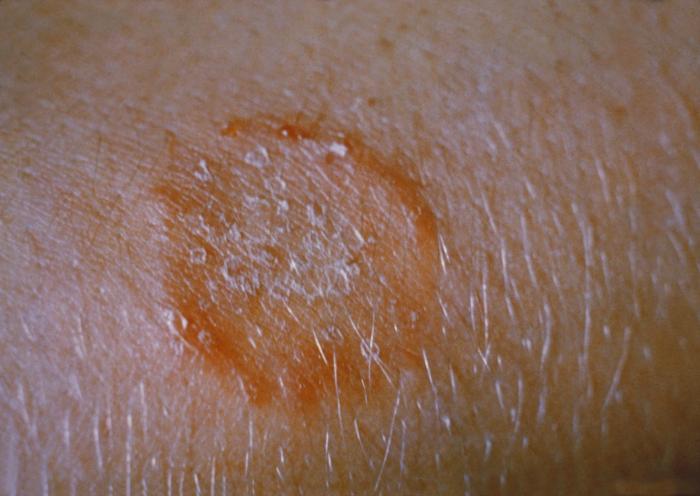
What is ringworm (tinea corporis)?
Ringworm is a common fungal skin infection — despite the name, no worm is involved. It is caused by dermatophyte fungi and usually appears as a round, red or discolored, scaly patch with a raised border and a clearer center. On the body it is called tinea corporis. It spreads through skin-to-skin contact, shared items, or contact with infected animals, and it is usually very treatable with antifungal cream. Scalp and nail infections are related but need different, longer treatment.
How online ringworm prescriptions work
You complete a secure online assessment describing your rash, where it is, how long you have had it, allergies, medications, and pharmacy preference. A licensed physician reviews the information and may follow up if more detail is needed. If your symptoms fit uncomplicated body ringworm and there are no safety concerns, the clinician can send an electronic prescription for a topical antifungal to your selected pharmacy for same-day pickup in most cases.
Vyta.co does not automatically prescribe. If your answers suggest scalp or nail involvement, a widespread or rapidly spreading rash, a weakened immune system, or an uncertain diagnosis, the clinician may recommend in-person care instead.
Pharmacy pickup
Clinician-reviewed
No charge if not prescribed
When online ringworm treatment is appropriate
Telehealth may be appropriate for adults with a typical, limited ringworm patch on the body — a round, scaly, itchy rash with a raised border — especially when you have had ringworm before and recognize it.
Because ringworm can look like eczema, psoriasis, or other rashes, your clinician reviews the full intake before deciding whether an antifungal is clinically appropriate.
When to see a doctor in person
Online care is not right for every rash. Seek in-person care if any of the following apply.
- Ringworm on the scalp or hairline, or a patch of hair loss (often needs oral medication)
- A thick or discolored fingernail or toenail, or a widespread or rapidly spreading rash
- A weakened immune system or diabetes, signs of bacterial infection (pus, warmth, increasing pain), or a rash that does not improve after about two weeks of treatment
First-line therapies for ringworm
For uncomplicated body ringworm, clinicians commonly prescribe a topical antifungal cream such as terbinafine 1%, clotrimazole 1%, or ketoconazole 2%, in line with standard dermatology guidance. Terbinafine cream is often applied once or twice daily for one to two weeks, while clotrimazole and ketoconazole are typically used for two to four weeks. Keep applying the cream for the full course — and usually a few days after the rash clears — to keep it from coming back.
Keeping the area clean and dry, not sharing towels or clothing, and washing bedding help prevent spread and reinfection. Your clinician chooses the medication and duration based on the location and extent of your rash and your medical history.
What causes ringworm?
Ringworm is caused by dermatophytes — fungi that live on the skin's outer layer and thrive in warm, moist conditions. You can catch it from another person, from pets such as cats and dogs, from contaminated surfaces like locker-room floors, or from sharing towels and clothing. It is not a sign of poor hygiene. Keeping skin cool and dry lowers the risk, but an established, symptomatic patch usually needs antifungal treatment to clear.
What if ringworm keeps coming back?
Ringworm that keeps returning, spreads widely, or never fully clears deserves a closer look. Recurrences can happen when treatment is stopped too early, from an ongoing source like a pet or a household member, or when scalp or nail involvement acts as a reservoir. Vyta.co can help with simple, limited body ringworm, but stubborn or widespread cases may be better handled by an in-person clinician or dermatologist.