What causes hot flashes?
Your brain keeps body temperature inside a narrow comfort range. The leading explanation for hot flashes is that falling estrogen narrows that range, so a small rise in temperature you would once not have noticed sets off a full cooling response. Blood vessels in your skin open, heat rushes to your face and chest, you sweat, and you may feel chilled afterward. A night sweat is the same thing happening while you sleep. In the Study of Women's Health Across the Nation, frequent hot flashes lasted a median of 7.4 years, including 4.5 years after the final period.
How low-dose paroxetine works
Paroxetine is a selective serotonin reuptake inhibitor, or SSRI. Serotonin helps the brain control body temperature, though the FDA label notes that how paroxetine reduces hot flashes is not known. In a randomized trial, women taking 10 mg had about 41% fewer hot flashes after four weeks, compared with 14% fewer on a placebo.
The 2023 Menopause Society position statement recommends SSRIs such as paroxetine for hot flashes and gives them its highest evidence rating. It also says hormone therapy is still the most effective treatment, so paroxetine suits women who cannot take estrogen or prefer not to.
By mail or pharmacy pickup
Physician-reviewed
Full refund if not prescribed
The 10 mg tablet and the 7.5 mg capsule
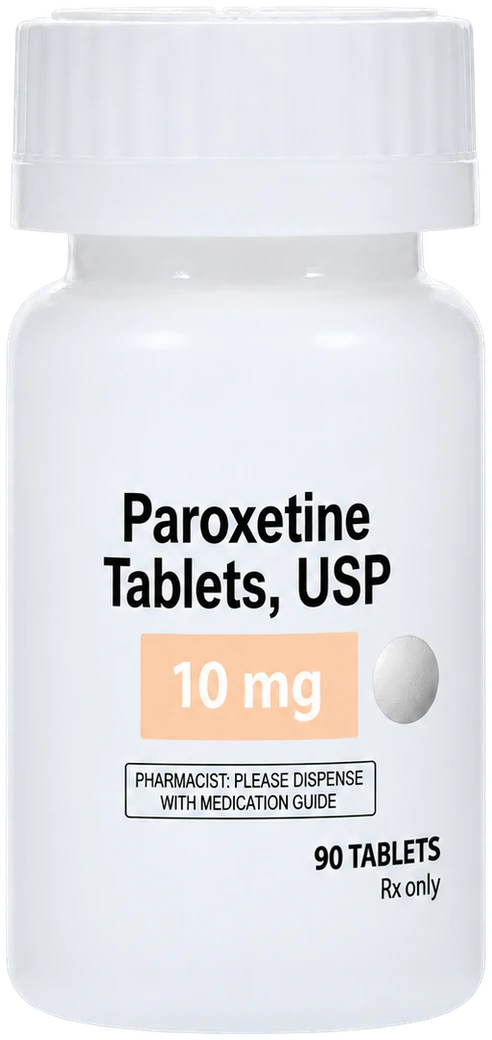
In 2013 the FDA approved a 7.5 mg paroxetine capsule, brand name Brisdelle, as the first nonhormonal treatment for menopause hot flashes. Vyta.co prescribes the 10 mg generic tablet. It is the closest tablet strength, nearly every pharmacy stocks it, and it is a low-cost generic.
Prescribing the tablet for hot flashes is off-label. The FDA approved the tablet for depression and anxiety disorders, and physicians prescribe it for hot flashes because a trial of the 10 mg dose showed it works.
How to take it, and how long it takes
Take one tablet once a day at about the same time, with or without food. Your physician will tell you whether morning or bedtime suits you better. In trials, women had fewer hot flashes by week 4, and the improvement held through week 12.
Hot flashes can return when you stop. Your prescription covers 3 months and has no refills, so you start a new visit about two weeks before you run out. Do not stop paroxetine suddenly. Ask your physician how to taper, because stopping at once can cause dizziness, vivid dreams, and trouble sleeping.
Side effects and safety
In trials of the 7.5 mg dose, the most common side effects were headache, tiredness, and nausea, each in about 4% to 6% of women. Paroxetine can also cause drowsiness, dry mouth, sweating, and a lower sex drive, and alcohol can make these worse. Be careful driving until you know how it affects you.
Every SSRI carries an FDA boxed warning about suicidal thoughts and behavior in children and young adults, and the label of the hot flash capsule carries it too. Tell your physician right away about new or worsening mood changes, agitation, or thoughts of harming yourself. Paroxetine also raises the risk of bleeding when you take it with aspirin, ibuprofen, naproxen, or blood thinners, so list every medication and supplement on your assessment, including St. John's wort.
When online treatment is appropriate
Telehealth suits women in perimenopause or after menopause whose hot flashes or night sweats came on around the time their periods changed, and who cannot take estrogen or would rather not. Common reasons to avoid hormone therapy include a history of breast cancer, blood clots, stroke, or heart disease.
Keep up with your routine care, and message your physician if your hot flashes are no better after four weeks.
When to see a doctor in person
Online care is not right for everyone. See a clinician in person first if any of the following apply.
- Under 40
- Pregnant, could be pregnant, or breastfeeding
- Taking tamoxifen
- Taking an antidepressant now, for any reason (mood, sleep, pain or quitting smoking)
- Taking thioridazine or pimozide, or an MAOI taken in the past 14 days (such as phenelzine, selegiline or the antibiotic linezolid)
- An allergic reaction to paroxetine (Paxil, Brisdelle)
- Bipolar disorder
- Thoughts of harming yourself
- Hot flashes or night sweats with fever, weight loss you cannot explain, or swollen glands
If you are having thoughts of harming yourself, call or text 988, the Suicide and Crisis Lifeline, at any hour.
Paroxetine and tamoxifen
Your liver uses an enzyme called CYP2D6 to turn tamoxifen into its active form, and paroxetine blocks that enzyme. Some studies link the combination to a higher risk of breast cancer returning, and others have not found that risk. The FDA label advises physicians to consider avoiding the two together. Vyta.co does not prescribe paroxetine to women who take tamoxifen, so ask your oncologist about other nonhormonal options.
What else helps hot flashes?
Hormone therapy is the most effective treatment. Among nonhormonal options, The Menopause Society also recommends cognitive behavioral therapy, clinical hypnosis, gabapentin, fezolinetant, and oxybutynin. It does not recommend supplements, herbal remedies, cooling techniques, avoiding triggers, exercise, or yoga as treatments for hot flashes. Paroxetine does not treat vaginal dryness, which has its own online treatment.