What is genitourinary syndrome of menopause (GSM)?
Estrogen keeps the tissue of the vagina, vulva, urethra, and bladder thick, elastic, and well supplied with blood. When estrogen falls around menopause, that tissue thins and dries, vaginal pH rises, and the mix of bacteria changes. The result is dryness, burning, pain with sex, and urinary symptoms such as urgency and repeat UTIs. Doctors call the whole picture genitourinary syndrome of menopause (GSM). Older names for it are vaginal atrophy and atrophic vaginitis. The American Urological Association estimates that 27% to 84% of women have symptoms after menopause. Unlike hot flashes, GSM does not settle down over time, and it often goes untreated.
How low-dose vaginal estrogen works
Vaginal estrogen puts a small amount of estradiol directly on the tissue that needs it. Over several weeks the vaginal lining thickens, natural moisture and stretch return, and pH drops back toward its premenopausal range, which lets protective bacteria recover. Because the dose is low and local, very little is absorbed, and blood estrogen levels generally stay within the normal postmenopausal range.
The 2025 AUA/SUFU/AUGS guideline recommends that clinicians offer low-dose vaginal estrogen for dryness, irritation, and painful sex, and it has more evidence behind it than any other GSM treatment.
By mail or pharmacy pickup
Physician-reviewed
Full refund if not prescribed
Cream or vaginal tablets?
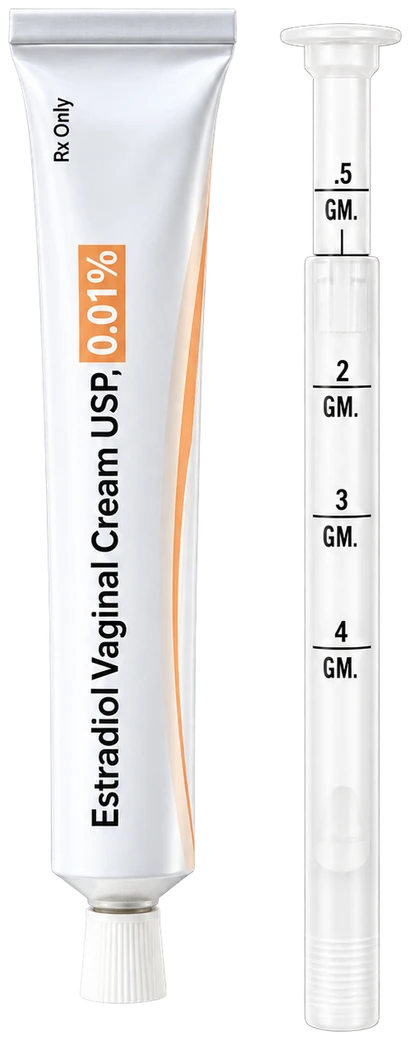
Estradiol cream 0.01% is measured with a reusable applicator, and your physician may suggest dabbing a small amount on the vaginal opening when the soreness is external. It is the least expensive option. Estradiol 10 mcg vaginal tablets are small tablets placed with a single-use applicator. They are less messy and deliver a fixed dose, at a higher pharmacy price.
Both work. The mailed option is the cream. If you send your prescription to your own pharmacy, the assessment asks which form you prefer, and your physician takes that into account.
How to use it, and how long it takes
You start with a dose at bedtime every night for two weeks, then use it twice a week on the same two days each week. Expect gradual change. Most women notice a difference within the first month or two, and improvement continues through about 12 weeks.
GSM is a long-term condition, so symptoms usually return if you stop. Your prescription has no refills, so you start a new visit about two weeks before you run out. Avoid using the cream as a lubricant right before sex, because a partner can absorb it and it can weaken latex condoms and diaphragms.
Is vaginal estrogen safe?
For most women, yes. Low-dose vaginal estrogen is a different treatment from the hormone therapy taken as a pill or patch. For about 20 years its label carried the same boxed warning as those systemic products, a warning drawn from a trial of oral hormones. In November 2025 the FDA announced it would remove that warning from low-dose vaginal estrogen.
You do not need to take a progestogen with it, and the AUA guideline advises against routine endometrial monitoring for women who use it. Side effects are usually mild: vaginal discharge, irritation in the first weeks, breast tenderness, and the occasional yeast infection. Tell your physician about any vaginal bleeding, which always needs to be checked.
When online treatment is appropriate
Telehealth suits women in perimenopause or after menopause whose symptoms fit the usual pattern: dryness, burning, pain with sex, or urinary urgency that came on gradually. The AUA guideline notes that clinicians usually diagnose GSM from symptoms.
The same guideline also recommends a genitourinary exam, so keep up with routine gynecologic care, and see a clinician in person if your symptoms have not improved after 12 weeks of treatment.
When to see a doctor in person
Online care is not right for everyone. See a clinician in person first if any of the following apply.
- You are under 40
- Vaginal bleeding that has not been evaluated, whether after menopause, between periods, or after sex
- Breast, uterine or ovarian cancer, now or in the past (your oncologist should be part of the decision)
- A past blood clot, stroke, or heart attack, or liver disease
- Pregnancy or breastfeeding
- New discharge with odor, sores, a lump, or pelvic pain
Vaginal estrogen and recurrent UTIs
After menopause, thinner tissue and a higher vaginal pH make it easier for bacteria to reach the bladder. The AUA guideline recommends low-dose vaginal estrogen for women with GSM and recurrent UTIs, to lower the risk of future infections. It works as prevention and does not treat an active infection. If you have burning and urgency right now, start with online UTI treatment, and read more about recurrent UTIs.
What about moisturizers and lubricants?
They are a reasonable first step, and you can keep using them with estrogen. A vaginal moisturizer used every few days eases day-to-day dryness, and a lubricant reduces friction during sex. Neither reverses the tissue changes. If you have tried them and still have symptoms, the AUA guideline supports adding low-dose vaginal estrogen.